


BABOON
Scientific name: Simia hamadryas
Pylum: Chordata
Order: Primates
Family: Cercopithecidae
Genus: Papio
Vulnerability: Least concern
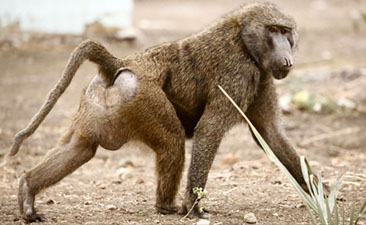
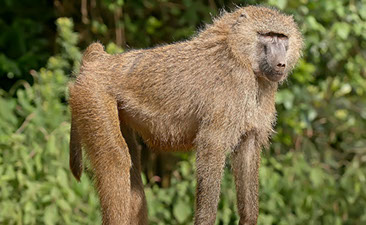
Baboons vary in size and weight depending on the species. The smallest, the Kinda baboon, is 50 cm (20 in) in length and weighs only 14 kg (31 lb), while the largest, the chacma baboon, is up to 120 cm (47 in) in length and weighs 40 kg (88 lb).
All baboons have long, dog-like muzzles, heavy, powerful jaws with sharp canine teeth, close-set eyes, thick fur except on their muzzles, short tails, and nerveless, hairless pads of skin on their protruding buttocks called ischial callosities that provide for sitting comfort. Male hamadryas baboons have large white manes. Baboons exhibit sexual dimorphism in size, colour and/or canine teeth development.
Baboons are diurnal and terrestrial, but sleep in trees, or on high cliffs or rocks at night, away from predators. They are found in open savannas and woodlands across Africa. They are omnivorous: common sources of food are grasses, seeds, roots, leaves, bark, various fruits, insects, fish, shellfish, rodents, birds, vervet monkeys and small antelopes.


